
Types of Aluminium Windows
Below are the most popular types of windows in Singapore. Each type of window has different characteristics to consider for your room’s suitability. Functionality and practicality should be the deciding factor when selecting which type of window to install, as they affect the level of privacy, ease of access and maintenance and level of ventilation and light.
Choosing the Right Window
Choosing a window system is a complex process that goes far beyond just the preference of sliding or casement panels. It is important to understand that not only the style of window panels but also their glass type, frame finish, and opening mechanism might have a big impact on the comfort level inside the house. Clear glazing lets the maximum daylight in, whereas tinted or reflective glasses work better in reducing glare and heat. Frosted or sandblasted glass can be used when privacy is needed without totally sacrificing the light. As for the aluminium frames, they are most often powder coated or anodised so as to not only resist corrosion but also match the colours of interiors. Indeed, these minor technical choices decide the ambience of a room as time passes. Good windows properly tailored can function for minor ventilation when the weather is humid, act as a sunlight filter when needed, and still retain the same look even after many years of being exposed to different elements.
Windows Installation and Repair
Windows safety is a paramount safety consideration. Our team provides professional safety installation, regular maintenance and repair of all windows. Should your window be leaky, partially dislodged or shaky, please do not hesitate to contact us for a quick survey of the condition of your window.
Falling Windows
Window safety is an ongoing maintenance responsibility, not a one-year statistic. Check for loose or corroded fasteners on casement windows and confirm that sliding-window safety stoppers and angle strips remain correctly positioned. If a panel is loose, partly dislodged or difficult to secure, stop operating it where practical and arrange prompt assessment by an appropriate approved window contractor.

Casement Windows
Casement windows are hinged windows attached to a frame, and operated by levers and held open using a casement stay. A friction stay is required to keep the window in position when it opens outward to resist strong wind.
Aluminium-framed casement windows provide excellent thermal performance of any window type, and have very secure locking mechanisms. They are completely streamlined, and cranks are foldable to allow curtains and blinds to fall naturally.
As they can be opened at an angle of 90 degrees or more, it allows unobstructed views and maximises unrestricted breeze into your home.
However, they are less resistant to wind and water infiltration, they have better compression to close tightly against the frame. This is one reason why casement windows are used for soundproof windows too.
In Singapore, casement windows are popularly used in the kitchen to maximise ventilation.

Double-leaf casement
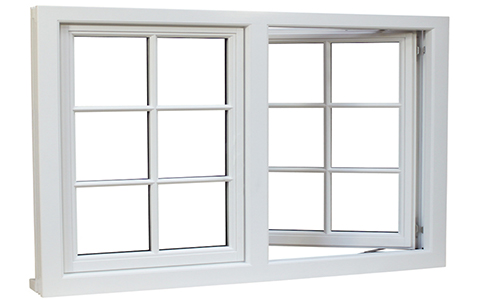
Standard white single
Sliding Windows
Sliding windows are one of the most popular window options in Singapore. They are easy to operate since they slide open and shut. They are also very easy to maintain as both sides of the glass panel can be easily accessed for cleaning purposes. They offer good natural light and air ventilation for bedrooms, bathrooms and in kitchens.
One distinct advantage of sliding windows over casement types is that the sliding mechanism does not require additional space to open. For this reason, it is a perfect choice for room and corridor windows where there is limited space. With no external protrusions it is also easy to add insect or security screens.
When deciding to install sliding windows, one should take note of the number of panels needed as it determines the percentage of the opening. For example, the maximum opening for a 2 panel window is 50%. You may choose the preferred number of tracks for your frame. One track per panel will provide you maximum opening, while having more tracks will increase the thickness of your frame.
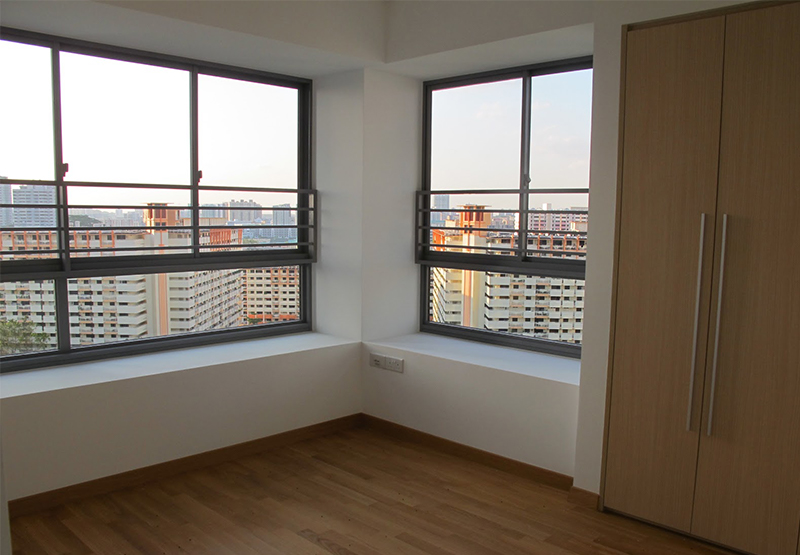
Sliding windows in bedroom
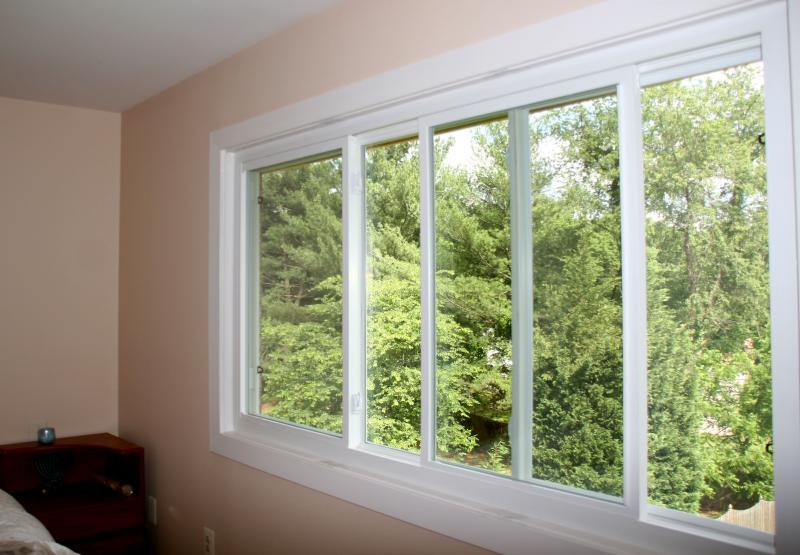
Sliding windows in bedroom
Louvred Windows
Louvre windows are windows with horizontal planks/blades which either adjustable or fixed. The planks are angled to admit light & air at the same time they can keep out rain, sunshine and maintain privacy from outsiders. The horizontal planks are typically made of glass, which is similar to venetian blinds but are wider.
Louvre windows are best suited for achieving good ventilation, as the amount of opening and air can be easily controlled by the user. Manual adjustment of the planks can be done with a metal lever whereas for sophisticated systems, the planks can also be operated by electric or remote-controlled levers. In some cases, the louvres can also be adjusted to control the level of privacy when frosted or coloured glass louvres are used.
In Singapore, louvre windows are popularly used for bathrooms, where adequate privacy and ventilation is necessary.
Top-Hung Windows
Aluminium top hung windows are constructed using an outer frame and a hinged “sash” which projects outwards. As the hinge is on the top of the outer frame, it allows the bottom to swing out secured by high quality steel friction stays. Aluminium top hung windows are ideal in situations where furniture prevents easy access to the window. They can be left partly open in bad weather without allowing nature’s elements into your home.
Types of Glazing Options
Choose the type of glass depending on the desired level of privacy and sunlight. Here are the popular types of glass for different functions:
- Clear Glass – maximises sunlight and views
- Tinted glass – minimise direct sunlight entering your premises
- Reflective blue glass – high privacy
- Reflective green glass – high privacy
- Sandblasted glass – high privacy
- Double glazed glass – provides excellent soundproofing from main and noisy roads
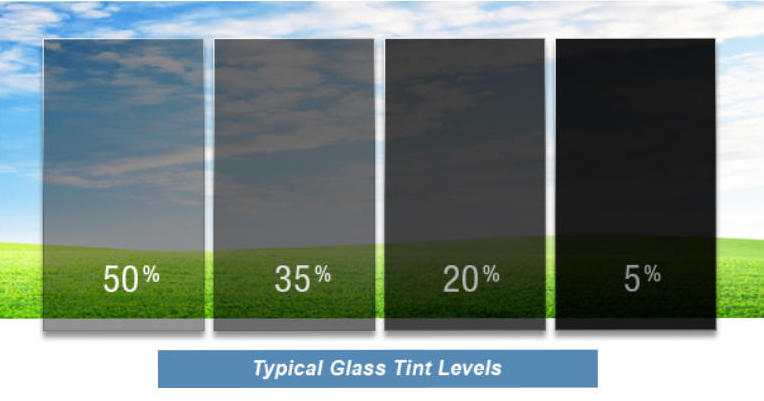
Level of tint
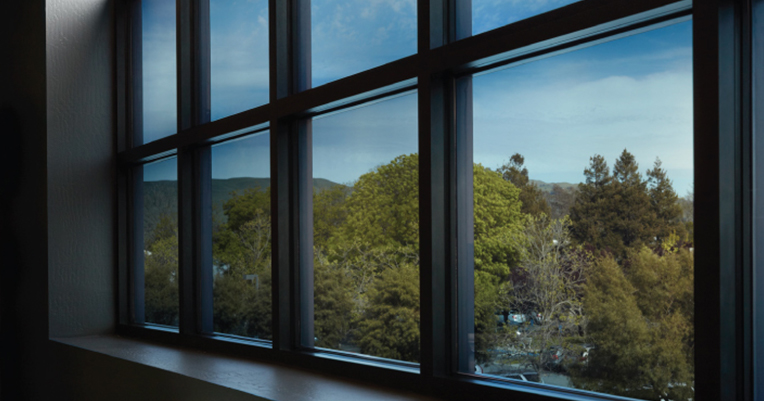
Energy-saving tint
Surface Coating
Aluminium frames can be easily coated to offer protection against oxidation and to match the aesthetics of your room:
- Powder coating – provide limited range of solid colours (e.g. white, grey, black, blue, black )
- Anodise – only 3 colours (e.g. natural, bronze and black)
Planning a Window Project in Singapore
A useful window proposal starts with the opening, not a catalogue photo. Panel size, opening direction, reachable handles, nearby furniture and the position of curtains or grilles all affect daily use. Ventilation also needs to be balanced with safe operation and cleaning access. A large outward-opening sash may admit more air, while a sliding arrangement avoids projecting into an exterior or circulation space. Our dedicated guides to casement windows and sliding windows explain these differences in more detail.
For replacement work, we inspect how the current frame meets the wall and whether water marks, movement or damaged finishes point to a wider issue. Glass should then be selected around the room’s actual priorities. Clear glazing preserves daylight and views; privacy glass is more suitable where direct sightlines are a concern; and a more complete frame-and-glazing system may be needed where outside noise is the main problem. Customers comparing acoustic options can read about our approach to sound-reducing and double-glazed windows.
HDB window installation and replacement is subject to current requirements. HDB states that owners must engage a BCA-approved window contractor listed in its directory for this work. Existing full-height, three-quarter-height and bay windows also have specific restrictions. The current HDB window-work guidelines should therefore be checked for the flat and proposed scope rather than relying on an old renovation rule or another property’s approval.
After installation, smooth operation is a useful first check, but maintenance remains important. Look for fasteners that are loose or corroded, panels that rattle or lift, worn safety stoppers, stiff locks and changes in the way a sash closes. Do not force a window that has become uneven. Our window repair and maintenance service covers assessment of common operating and safety concerns. Photographs of the whole opening and the affected part can help us understand the initial enquiry, although the final recommendation depends on an on-site inspection.
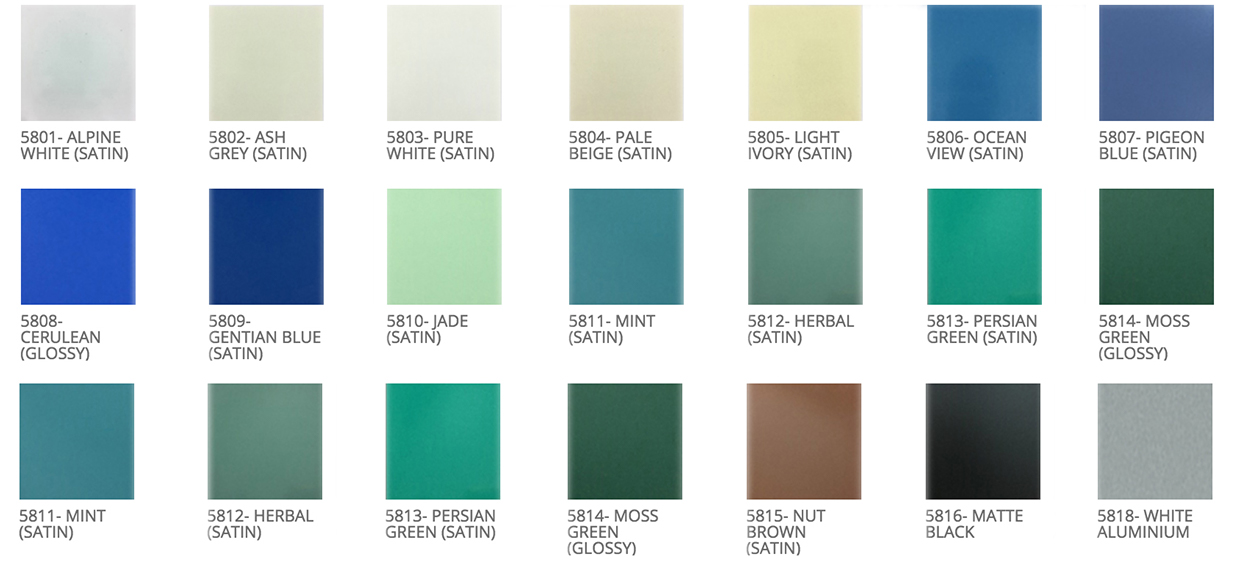
Powder Coat Chart
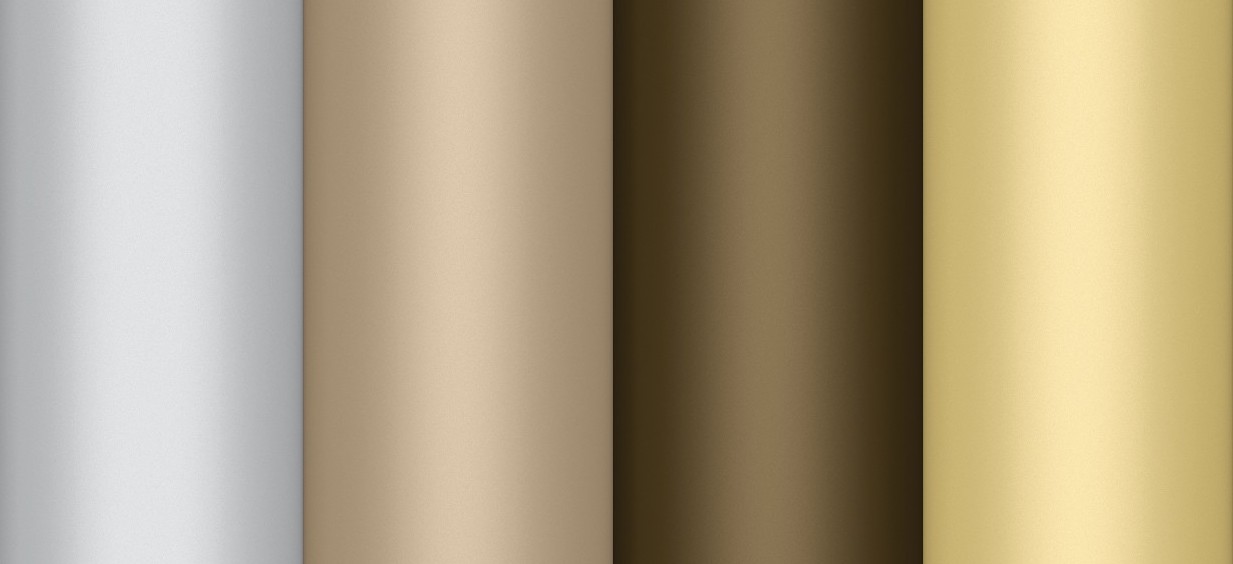
Anodised Colours
From opening type to final operation
Choose the configuration around safe operation and daily use, then select glazing and finish. A catalogue image alone cannot show whether the window suits the actual opening.
Casement, sliding, top-hung or louvred
Light, privacy, glare and noise priorities
Reach, cleaning and exterior clearance
Current window rules must be checked
Measure the opening, not the old sash
- 1
Width at top, middle and bottom
- 2
Height at left, centre and right
- 3
Frame depth, sill and drainage path
- 4
Curtain, grille and furniture clearance
The narrowest usable dimensions and surrounding condition affect the proposal.
Prepare for the survey
- Full-opening and room photographs
- Approximate width and height
- Property type and room use
- Preferred ventilation and privacy
- Visible leaks, rattles or damaged parts
Approximate measurements and photographs help with initial scoping. Final dimensions and site conditions should be verified before fabrication or installation.
A practical sequence
- 01
Assess
Review the existing frame, wall junction and intended use.
- 02
Configure
Choose panel count, opening direction and reachable hardware.
- 03
Specify
Confirm glazing, finish and relevant safety components.
- 04
Verify
Check movement, closure, locks, seals and visible finish at handover.
Confirm the completed work
- Level and aligned panels
- Controlled opening and secure closure
- Working handles and locks
- Maintenance points explained
Frequently Asked Questions
| Question | Answer |
|---|---|
What types of aluminium windows do we install? | Casement, sliding, louvred, and top-hung windows. |
What's the difference between casement and sliding windows? | Casement windows open outward via hinges and provide excellent thermal performance and unobstructed views; sliding windows are easier to operate and maintain, and don't need extra space to open. |
Are window safety stoppers important? | Yes, a lack of proper safety stoppers and angle strips has been linked to falling window incidents; we install windows with safety in mind. |
What glazing options are available? | Clear, tinted, reflective blue/green, sandblasted, and double-glazed glass, depending on your privacy, light, and soundproofing needs. |
What frame finishes are available? | Powder coating (a limited range of solid colours) or anodising (natural, bronze, or black). |