
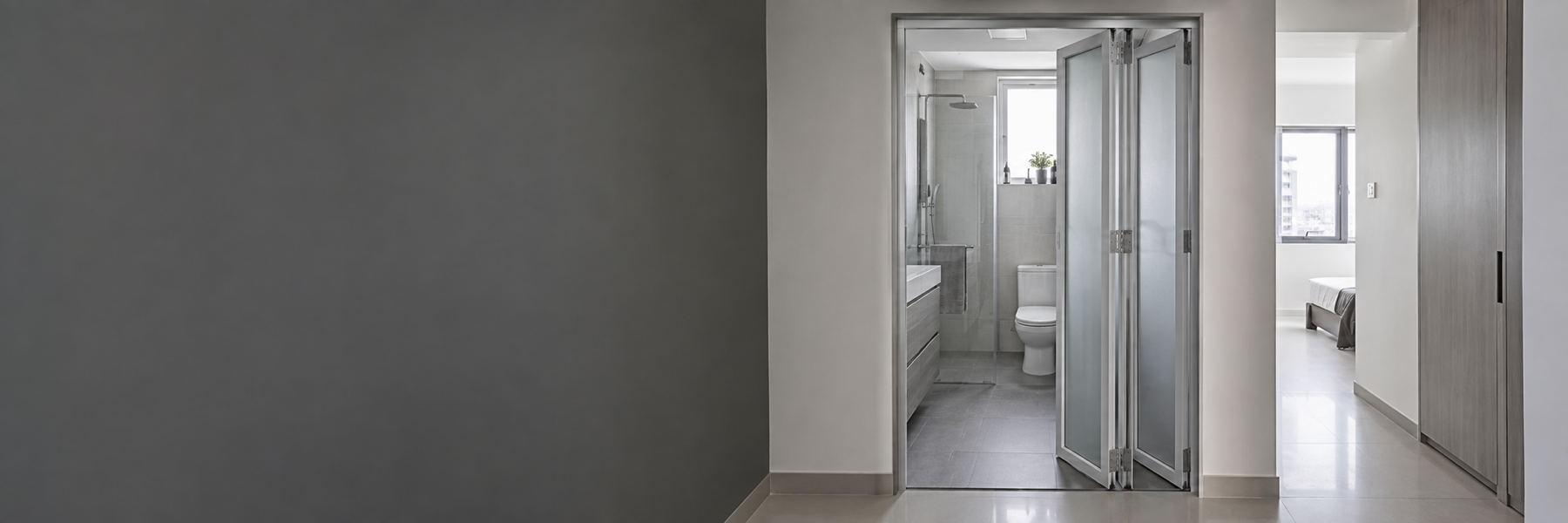
Space-Saving Aluminium Doors
A bi-fold door uses hinged panels that fold together as the door opens. Because the panels occupy less swing space than a conventional single-leaf door, this arrangement can work well in bathrooms, kitchens, utility areas and compact internal rooms. We plan the panel size, folding direction, frame, track and infill material around the actual opening and the clear space required for comfortable access.
Choosing the Right Configuration
The most suitable bi-fold system depends on the width and height of the opening, wall position, nearby fittings and how frequently the door will be used. A bathroom entrance has different privacy and moisture considerations from a kitchen divider or internal passage. We also consider whether the folded panels could obstruct switches, cabinets or circulation, then discuss a configuration that remains practical when both open and closed.
Measurement and Installation
Accurate measurement helps the panels fold evenly and meet the frame correctly. We inspect the opening, floor level and surrounding surfaces before confirming the arrangement. The tracks, hinges, guides, handle and closing points must work together without placing unnecessary strain on the panels. Careful alignment during installation supports smoother movement and a neater fit around the doorway.
Plan the Folded Position
A bi-fold door saves swing space, but the folded panels still need a clear resting position. We check nearby walls, fittings, switches and circulation before confirming the opening direction.
How Bi-Fold Doors Work
Bi-fold doors are formed from connected panels that pivot at their hinges and travel along a guiding track. As the handle is moved, the panels fold towards one side of the opening. This reduces the broad arc created by a traditional swing door.
Some systems use both top and bottom guidance, while selected arrangements may be top hung. Each approach has practical trade-offs involving stability, floor clearance, weight and cost. We review the opening and intended use before discussing which configuration is suitable.
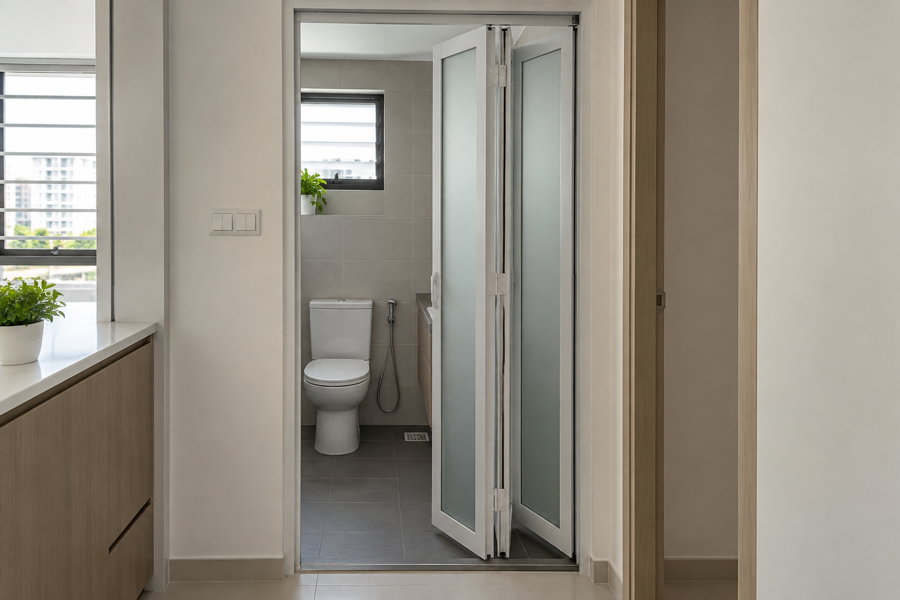
Bi-Fold Bathroom Door
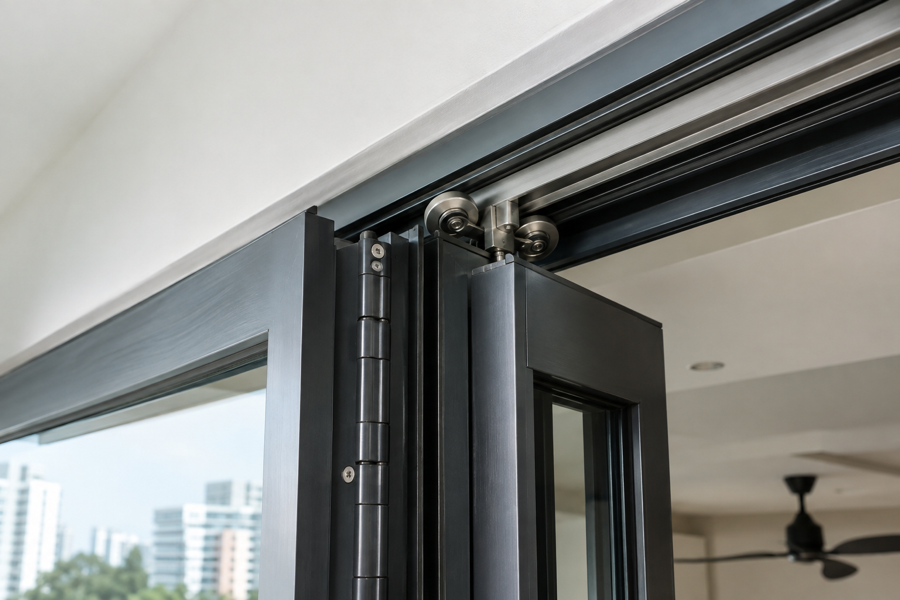
Bi-Fold Door Hardware
Bathrooms and Wet Areas
Bathrooms often have limited floor area, so a folding door can provide easier access without sweeping across the room. Aluminium is light, durable and suited to humid environments when properly finished. The panel material should provide the required level of privacy and be appropriate for regular cleaning.
The doorway, floor transition and nearby sanitary fittings must still be considered. A compact door is most useful when its folded position does not block movement or interfere with the bathroom layout.
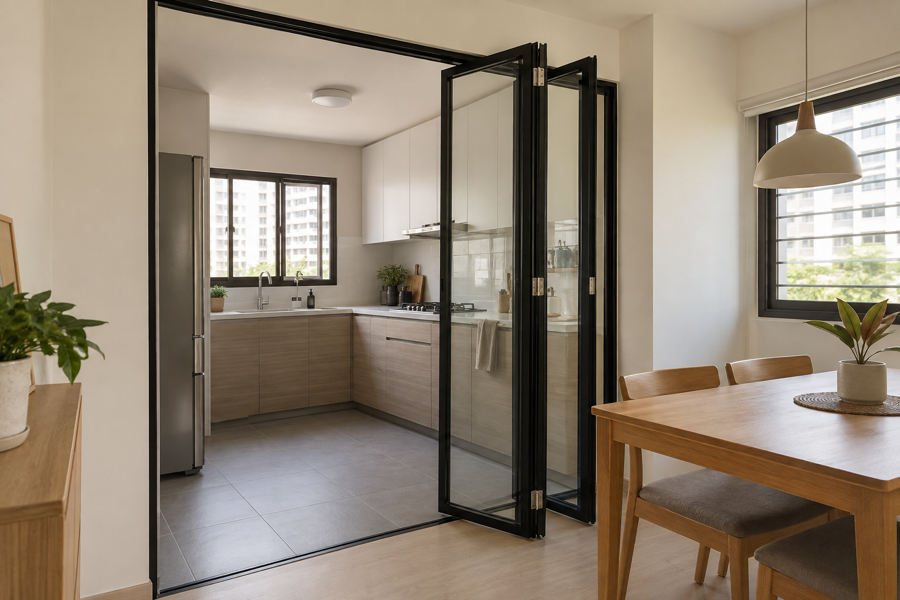
Bi-Fold Kitchen Divider
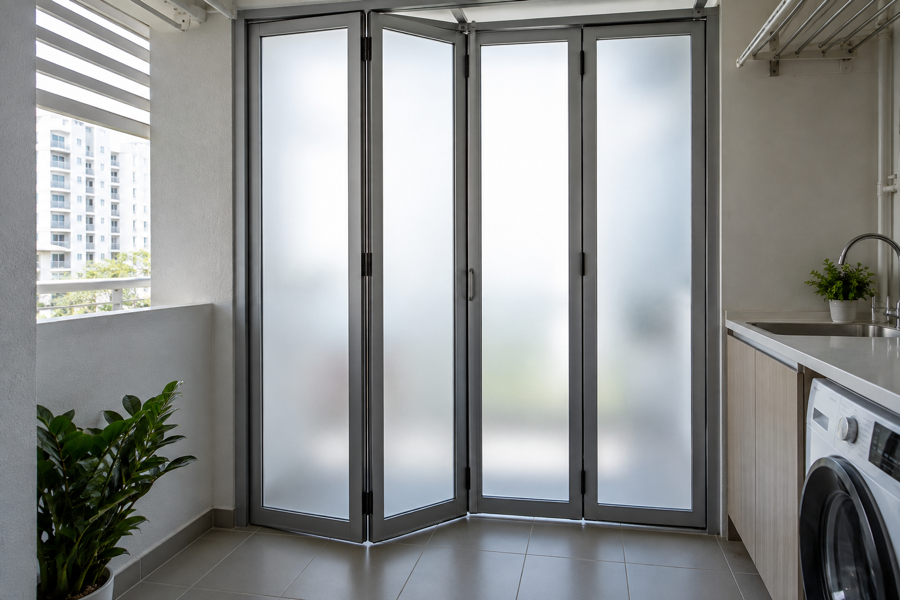
Frosted Bi-Fold Door Panels
Kitchens and Internal Dividers
A bi-fold door can separate a kitchen or utility space while taking up less opening room than a conventional swing panel. Glass or translucent infill can help retain borrowed light, while more opaque panels provide stronger visual screening. The choice depends on privacy, cleaning and the overall interior design.
For wider internal openings, the number and direction of panels need careful planning. We consider how the doorway will be used each day and where the folded stack can sit conveniently.
Panel and Infill Choices
Aluminium forms a strong, lightweight frame around the door panels. Depending on the selected system, the infill may use glass or acrylic in clear, frosted, coloured or more private finishes. The material changes the amount of light passing between rooms and the visual weight of the door.
We compare appearance with practical needs such as privacy, cleaning and frequent operation. Final material availability and thickness should be confirmed for the chosen system.
Colours and Finishes
Powder-coated or anodised aluminium finishes can coordinate the door with nearby windows, cabinets and interior fittings. Light neutral colours can keep a compact room feeling open, while darker frames create a stronger outline around the panels. We recommend reviewing actual finish samples where available, as colour can appear different under bathroom, kitchen and natural lighting.
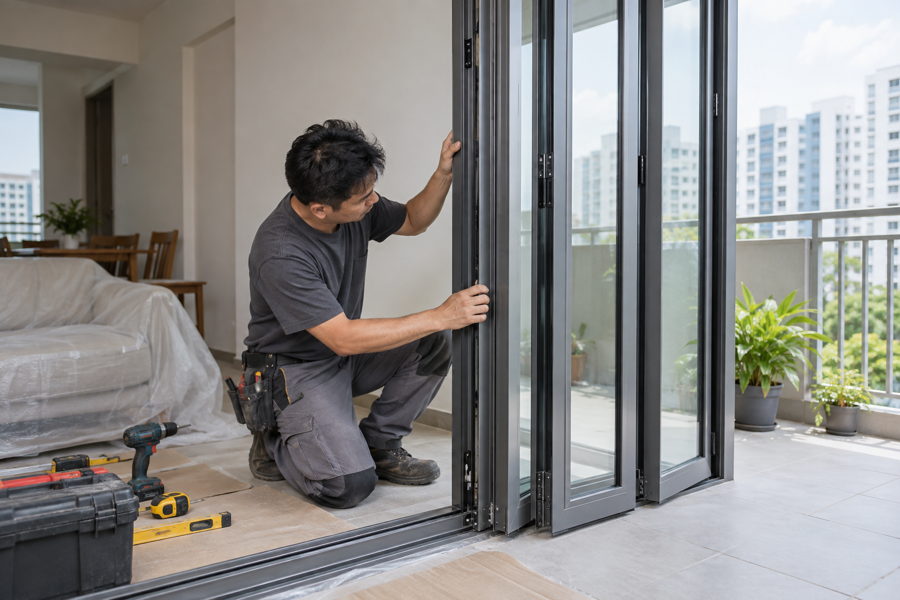
Aluminium Bi-Fold Door Installation
Care and Everyday Use
Open and close the panels using the handle rather than pulling on the panel edges. Keep the tracks and guides clean, and avoid allowing objects to obstruct the folding path. If the door becomes uneven, noisy or difficult to move, stop forcing it and arrange an inspection. Prompt adjustment can help prevent unnecessary wear to hinges, rollers, guides and closing hardware.
In bathrooms and kitchens, wipe moisture and residue from the frame and panel surfaces rather than allowing repeated build-up around hinges or guides. Use cleaning products that are appropriate for the selected aluminium finish and infill material. Abrasive tools may scratch clear panels or alter the appearance of a coated frame.
Check that the handle, latch and folded stack remain comfortable to use as furniture or fittings change around the doorway. A bin, cabinet handle or floor mat placed in the folding path can interfere with movement and place strain on the system.
When comparing a bi-fold door with a sliding or swing door, consider the clear opening, floor track, cleaning access and parked-panel position together. The most space-efficient choice is the one that works with the whole room, not simply the door with the smallest swing arc.
Allow for the folded stack and clear passage
Bi-fold doors save swing space by folding panels together, but the stack still needs a planned resting position that does not obstruct fittings or circulation.
Linked panels fold to one or both sides
Compact bathrooms and internal dividers
Folded stack, track and handle reach
Solid, translucent or glazed panels
Measure opening, stack and threshold
- 1
Finished width and height
- 2
Number and direction of folding panels
- 3
Folded stack projection
- 4
Track, threshold and nearby fixtures
The nominal frame width is not the same as the final clear passage after panels are folded.
Prepare for measurement
- Photographs from both sides
- Approximate opening dimensions
- Preferred fold direction
- Privacy and light requirements
- Nearby sanitary fittings or kitchen cabinets
Approximate measurements and photographs help with initial scoping. Final dimensions and site conditions should be verified before fabrication or installation.
A practical sequence
- 01
Plan
Select the fold direction around circulation and fixtures.
- 02
Measure
Verify opening, track position, levels and stack space.
- 03
Configure
Confirm panel count, infill, finish and hardware.
- 04
Check
Test folding sequence, alignment and closure.
Confirm the completed work
- Panels fold in sequence
- Stack clears nearby fittings
- Door aligns when closed
- Handle and catch operate
Frequently Asked Questions
Where can aluminium bi-fold doors be used? | We commonly consider them for bathrooms, kitchens, utility areas and compact internal rooms where reducing swing space is useful. |
How does a bi-fold door open? | Our bi-fold systems use connected panels that pivot at their hinges and fold towards one side while guided by the selected track arrangement. |
Can bi-fold doors provide privacy? | Yes. We can discuss frosted, coloured or more opaque infill options where stronger visual screening is required. |
Are top-hung configurations available? | Selected systems may use top-hung guidance, subject to the opening, panel weight and chosen product configuration we confirm for the project. |
How should a bi-fold door be maintained? | We recommend keeping tracks and guides clean, using the handle gently and arranging inspection if the panels become uneven, noisy or difficult to move. |