
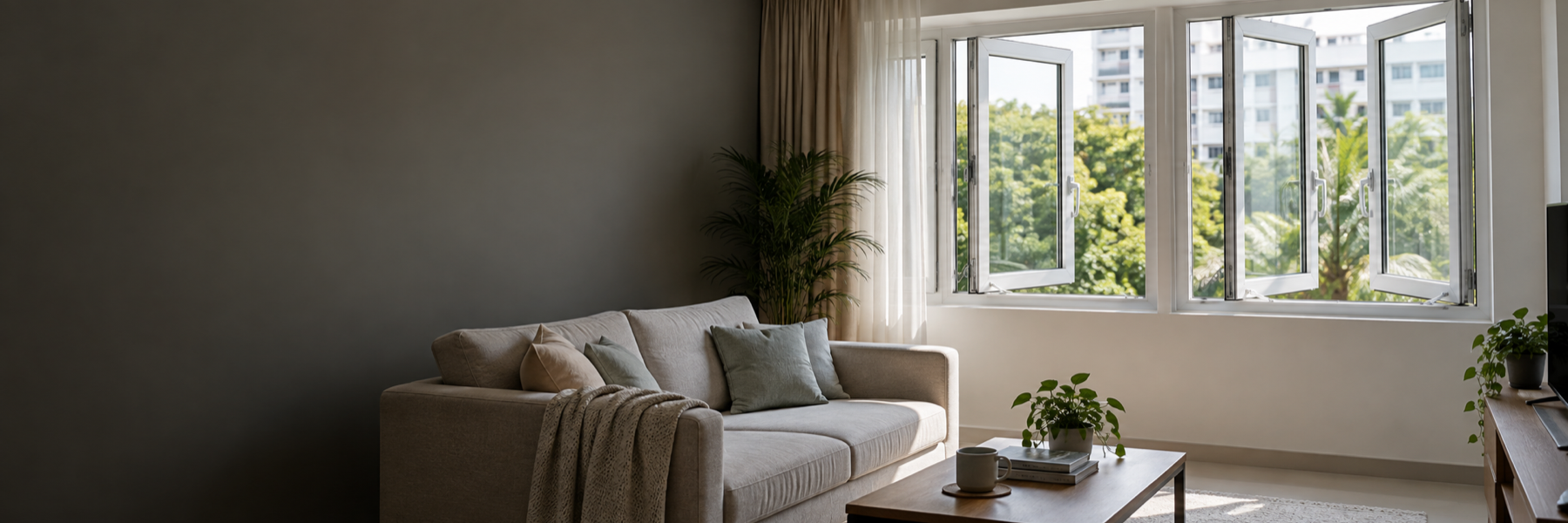
Aluminium Casement Windows
Casement windows are hinged at the side and open outward from the frame. Their wide opening can bring generous ventilation into kitchens, bedrooms, living areas and other suitable spaces. Aluminium frames provide a clean, durable structure that can be finished to coordinate with the property. We plan the panel arrangement, operating direction, glass and hardware around the opening rather than treating every room in the same way.
When Casement Windows Suit the Room
A casement system works well where there is safe clearance outside the opening and where a wider area of ventilation is useful. Furniture, curtains, exterior ledges and nearby building elements can affect the most practical panel arrangement. We also consider how the window will be reached for daily operation and cleaning. In exposed positions, the size and direction of each sash should be planned carefully so that the window remains convenient to control.
Made to Fit the Opening
Accurate measurement is essential because the frame must sit level and the sash must meet the seals and locking points correctly. We inspect the opening, discuss the required panel configuration and review glazing and finish choices before installation. For replacement work, the existing frame and surrounding area also need to be assessed so that removal and installation can be planned with minimal unnecessary disturbance.
Casement Window Safety
A loose sash, worn stay or corroded fastener can become a safety concern. We recommend checking casement windows regularly and arranging prompt assessment when a panel no longer opens, holds or closes securely.
How Casement Windows Operate
A casement sash is supported by hinges or friction stays and secured by a handle and locking mechanism. When the components are aligned correctly, the panel should open smoothly, remain controlled in position and close firmly against the frame.
Single- and double-leaf arrangements can be used according to the width of the opening and the desired ventilation. Wider openings may be divided into several manageable panels rather than using one oversized sash. We explain the practical trade-offs so the arrangement suits the room and the way the window will be used.
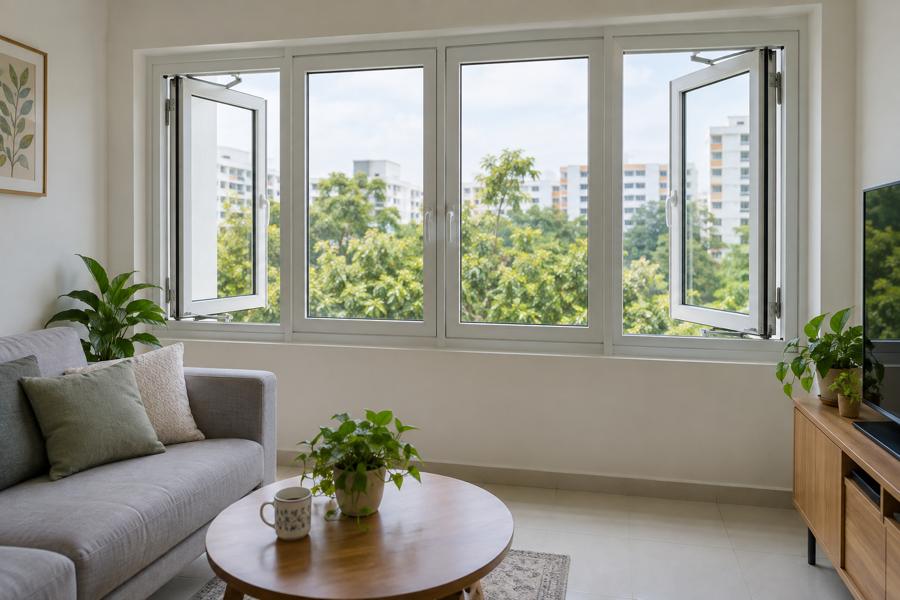
Completed Aluminium Casement Windows
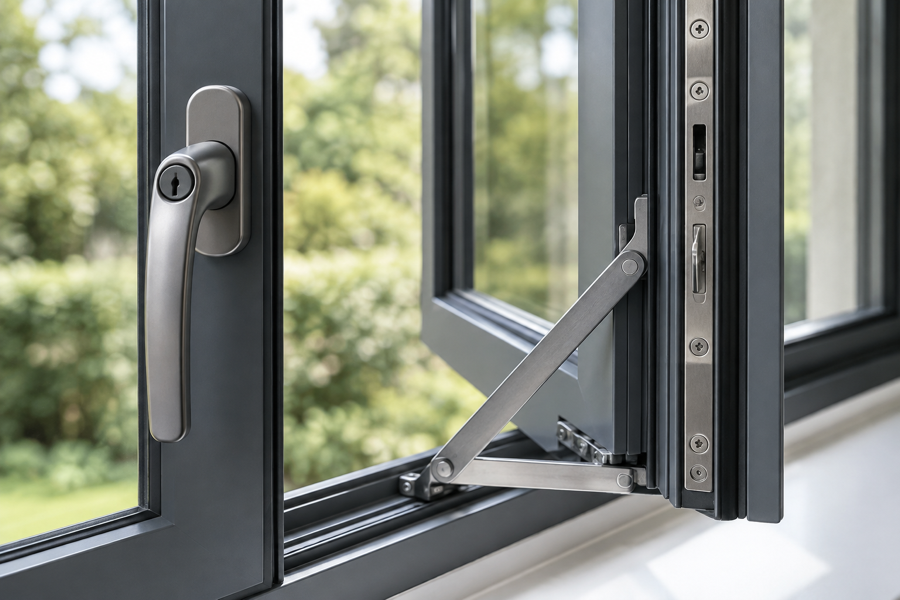
Casement Window Hinge and Handle
Ventilation and Weather Control
One advantage of casement windows is the ability to open a large portion of the window area. The angle of the sash can help catch passing air, which is useful in warm and humid conditions. When closed, the sash presses towards the frame and seals, helping create a firm closure.
Performance still depends on suitable glass, sound hardware, intact seals and careful installation. A window should not be described by the opening style alone; the complete frame, glazing and fitting details determine how it handles wind, rain and everyday use.
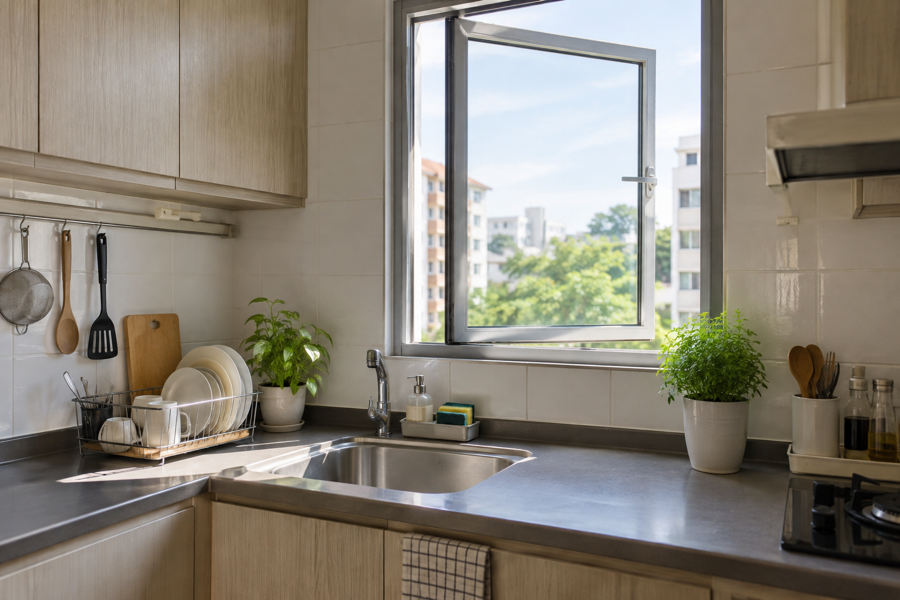
Casement Windows for HDB Kitchens
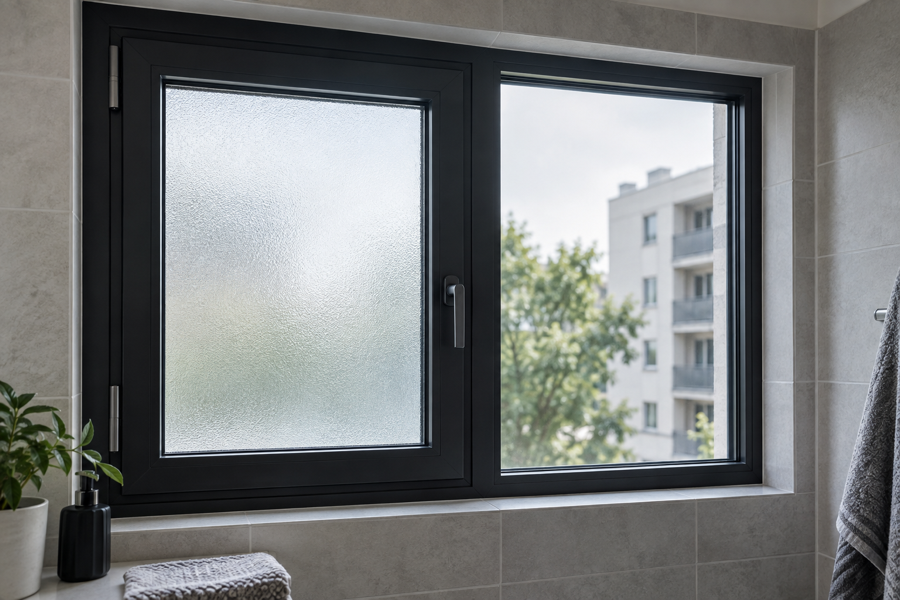
Casement Window Glazing Options
Safety Hardware and Retrofitting
Casement windows depend on secure fasteners and correctly working stays. Loose, corroded or worn parts can affect the control of the sash and should not be ignored. We inspect the moving hardware, attachment points and alignment when assessing an existing window.
Older HDB casement windows may be subject to retrofitting requirements involving their fasteners. Any installation, replacement or applicable repair work should follow current requirements and be handled by the appropriate trained and approved window contractor.
Glass Choices
Glazing changes the amount of daylight, privacy and glare provided by the window. Clear glass keeps views open, while tinted or reflective options can reduce brightness and increase daytime privacy. Frosted or sandblasted glass is useful where visual screening is more important.
Double-glazed glass can be considered where improved sound reduction is a priority. The frame, seals and installation must also suit that objective, because glass alone does not determine the overall result.
Frame Colours and Finishes
Aluminium frames can be powder coated or anodised to protect the surface and coordinate with the interior and exterior. Common neutral finishes are easy to combine with many renovation styles. The final choice should also consider any property or facade requirements, particularly for condominiums and other managed buildings where the outward appearance may need to remain consistent.
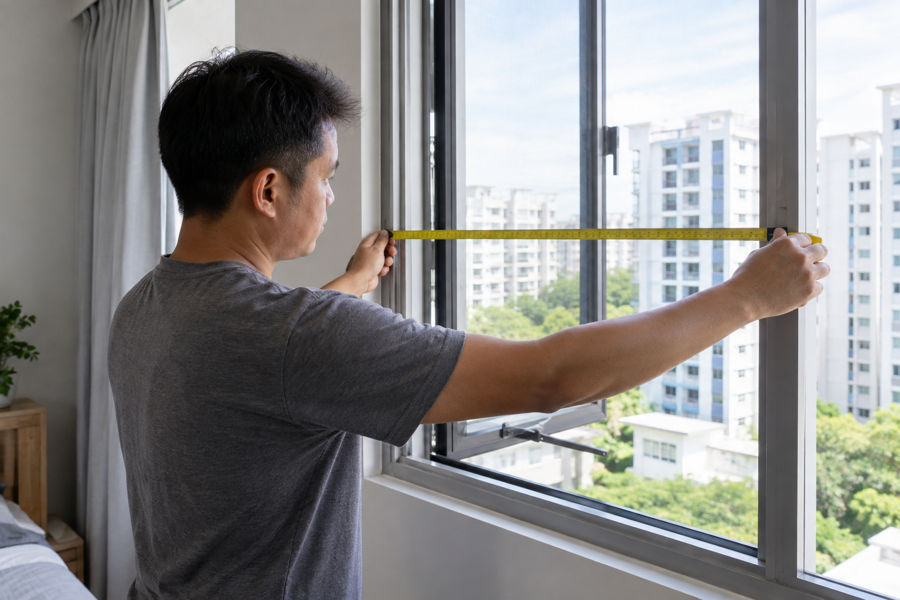
Casement Window Measurement
Care After Installation
Operate the handle and sash gently, keep the moving joints clean and look for any change in alignment or firmness. Do not allow a panel to slam in strong wind. If the sash begins to sag, rub, rattle or resist closing, arrange an inspection rather than forcing it. Regular checks help keep the fasteners, stays, locks and seals in serviceable condition.
Cleaning access should be considered before the panel arrangement is finalised. The widest possible sash is not always the easiest option to reach, control or maintain. Several smaller panels may provide a more manageable solution for a broad opening, while fixed sections can preserve daylight where ventilation is not needed across the full width.
Before confirming a replacement, compare the proposed opening direction with curtains, blinds, grilles and nearby furniture. These details affect everyday convenience long after installation. A carefully planned layout allows handles to remain accessible, keeps fabric away from moving hardware and reduces the risk of an open sash meeting an obstruction.
Check the sash, hardware and outward clearance
A casement sash needs a safe movement zone and reachable controls. Panel size, friction stays, fasteners and the closing line should be considered together.
Side-hinged outward-opening sash
Broad opening when clearance permits
Friction stays, fasteners, handle and lock
Grilles, curtains and exterior obstructions
Measure the opening and sash movement
- 1
Finished frame width and height
- 2
Outward swing and exterior clearance
- 3
Handle reach and grille clearance
- 4
Stay, fastener and locking positions
Several manageable panels may be more practical than one oversized sash.
Prepare for the survey
- Photographs inside and outside where safely possible
- Approximate opening size
- Existing panel count and direction
- Nearby curtains, grilles and furniture
- Any sagging, rattling or stiff operation
Approximate measurements and photographs help with initial scoping. Final dimensions and site conditions should be verified before fabrication or installation.
A practical sequence
- 01
Lay out
Plan panel sizes and opening direction around clearance.
- 02
Measure
Verify frame, sill, reveal and reachable controls.
- 03
Specify
Confirm glazing, finish, stays, fasteners and locks.
- 04
Check
Test sash control, alignment and secure closure.
Confirm the completed work
- Controlled sash movement
- Firm stays and fasteners
- Accessible handle and lock
- Even closure against the frame
Frequently Asked Questions
What is a casement window? | We describe it as a side-hinged window that opens outward and can provide a broad area for ventilation. |
Where do casement windows work well? | We commonly consider them for kitchens, bedrooms and living areas where there is safe exterior clearance and wide ventilation is useful. |
Can casement windows use privacy glass? | Yes. We can compare clear, tinted, reflective, frosted or sandblasted glazing according to the required light and privacy. |
What should I check on an older casement window? | We recommend checking the stays, fasteners, handle, locks, seals and sash alignment for looseness, corrosion or difficult operation. |
Can we replace casement windows in HDB flats? | Yes. We undertake HDB window work subject to the current contractor, installation and submission requirements that apply to the property. |