
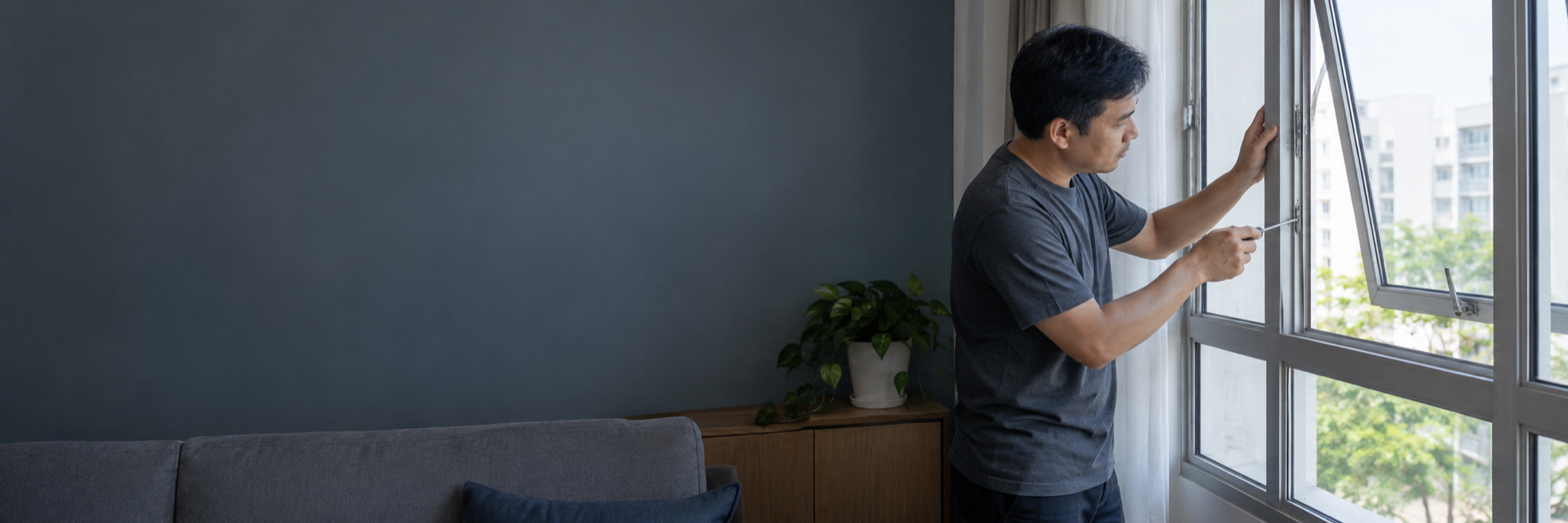
Window Problems We Assess
Windows are exposed to repeated opening, closing, wind and rain, so moving parts and seals can gradually wear. We assess aluminium casement, sliding, louvred and top-hung windows that feel loose, stiff, noisy, shaky or difficult to secure. The aim is to identify the affected component and explain whether a focused repair is suitable or whether wider replacement should be considered.
Repair Before Replacement
A fault does not automatically mean that the complete window must be replaced. Rollers, locks, handles, stays, seals, safety stoppers and other working parts may deteriorate at different rates from the frame. We inspect the condition of the window as a system, including alignment and operation, before recommending the practical scope of work. Where the frame or glazing is no longer secure, we explain why replacement may be the safer long-term option.
Inspection and Maintenance
Regular checks help reveal changes before a window becomes difficult or unsafe to use. We look for loose fittings, corrosion, worn moving parts, damaged seals, movement in the frame and panels that no longer open or close correctly. Owners should avoid forcing a jammed window, as additional pressure can damage the hardware or move the panel further out of alignment.
When to Stop Using a Window
If a panel is loose, partly dislodged, cracked, difficult to secure or at risk of falling, keep people away from the opening and avoid operating it. We can assess the condition and recommend an appropriate repair or replacement scope.
Casement Window Repairs
Casement windows rely on hinges or friction stays, fasteners, handles and locking points to hold an outward-opening sash in position. A sash that drops, rubs against the frame, moves unevenly or will not close firmly requires attention. We assess the hardware, alignment and attachment points before deciding what can be renewed.
Older aluminium casement windows may also require safety-related retrofitting. For HDB flats, the applicable requirements and the condition of all relevant fasteners should be considered as part of the inspection rather than treating one visibly loose component in isolation.
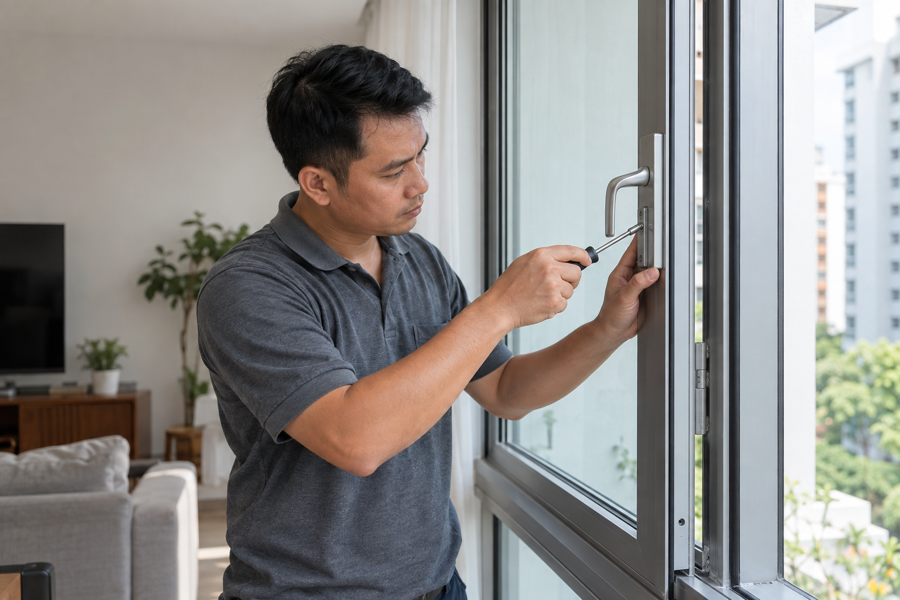
Aluminium Window Safety Inspection
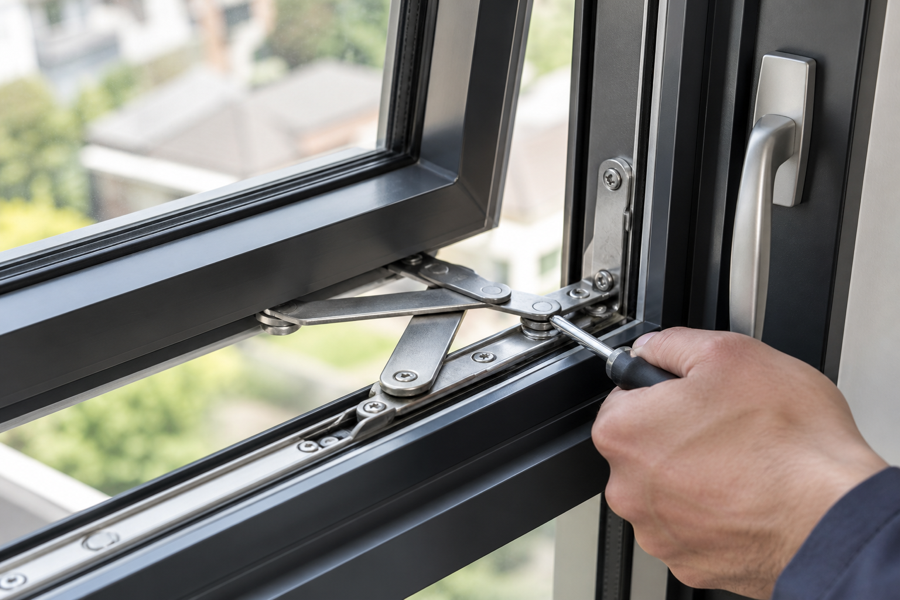
Casement Window Hardware Repair
Sliding Window Repairs
Sliding windows should move along their tracks without lifting, rattling or requiring excessive force. Dirt in the track can affect operation, but worn rollers, damaged track sections, missing safety stoppers or poor panel alignment can also cause difficulty. We check how each panel sits and travels before proposing repair work.
Safety devices are especially important because they help keep sliding panels within the frame. If a panel feels loose, can be lifted unexpectedly or no longer closes evenly, stop using it where practical and arrange an assessment instead of continuing to force it along the track.
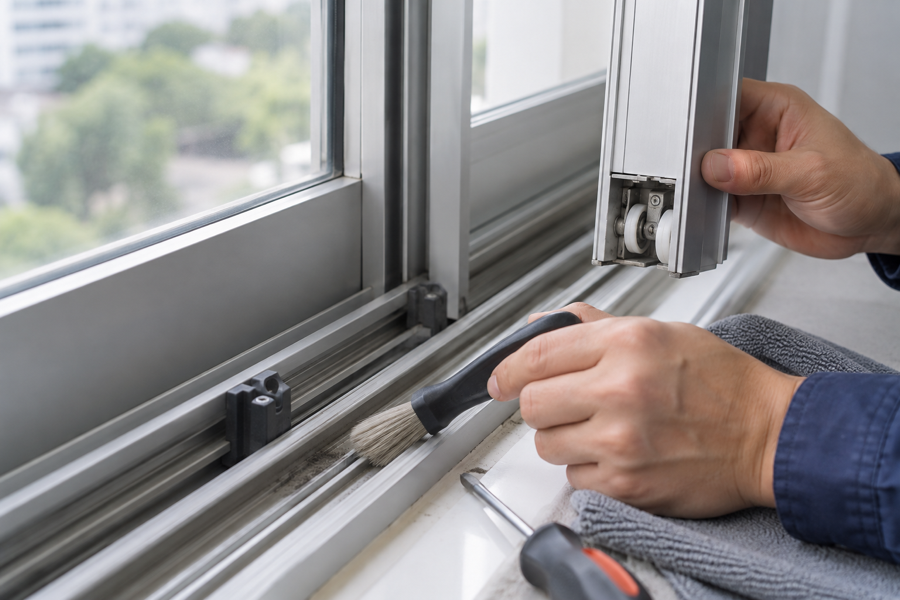
Sliding Window Track Repair
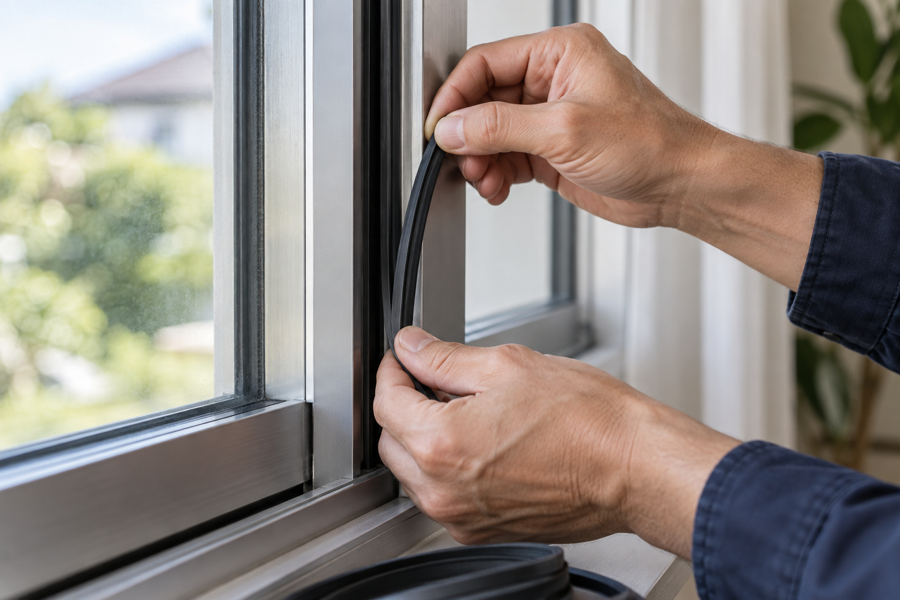
Aluminium Window Seal Replacement
Locks, Handles and Seals
Locks and handles affect both security and everyday convenience. We check whether the locking points meet cleanly and whether the handle operates without strain. Perimeter seals and gaskets also deserve attention when a closed window allows noticeable draughts, rattling or water entry.
Replacing a visible part without correcting the underlying alignment may only provide a temporary improvement. Our assessment considers how the hardware, sash and frame interact so that the repair addresses the cause of the operating problem.
Glass and Panel Condition
Cracked, chipped or loose glazing should be treated carefully. We assess the damaged panel, its surrounding frame and the way the glass is held before discussing replacement. The new glass should suit the opening and the window system rather than being selected only by appearance.
Clear, tinted, reflective and privacy glazing serve different needs. Where glass replacement is appropriate, we can discuss how daylight, privacy and heat or glare control affect the choice.
HDB and Private Properties
Window work must suit the property and the applicable building requirements. We have practical experience with HDB, private residential and commercial projects. For HDB window repair, retrofitting, installation or replacement, the correct contractor and submission requirements must be followed. Condominium owners may also need to observe management rules on external appearance, access and working hours.
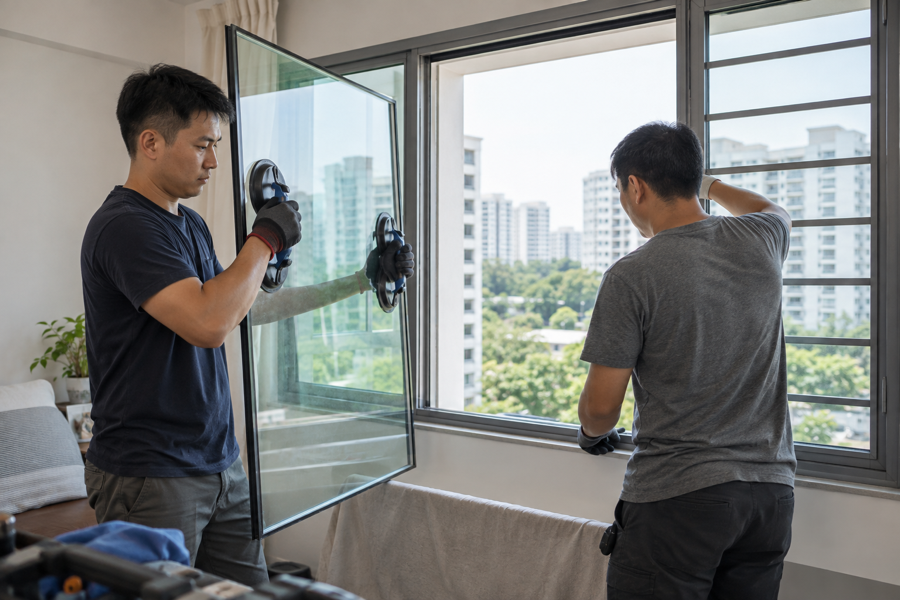
Window Glass Replacement
After the Repair
After work is completed, operate every affected panel and check that it opens, holds and closes as intended. Keep tracks clean, avoid hanging weight from handles or grilles, and do not ignore a new rattle or change in movement. Periodic visual checks make it easier to notice loose or worn components early. If a window again becomes difficult to operate, arrange an inspection rather than forcing it.
Keep a simple record of the affected window and the work completed, especially when several rooms use similar hardware. This makes it easier to explain any later change and distinguish a recurring problem from normal wear elsewhere. During routine cleaning, look at the panel edges, locks and visible fittings rather than checking only the glass. Rain or strong wind may reveal movement, rattling or water entry that is not apparent in calm weather.
When requesting an assessment, photographs and a clear description of the symptom can help establish the likely scope before a site visit. Final recommendations still depend on inspection because the same symptom may arise from different combinations of wear, alignment and damaged components.
Record the symptom before deciding repair or replacement
A clear description of how the window has changed helps focus the inspection. Stop using a panel if it feels loose, partly dislodged or unsafe to control.
Loose stays, fasteners, handles or alignment
Worn rollers, dirty tracks or missing restraints
Rattling, gaps, stiff locks or damaged seals
Loose or unstable panels need prompt assessment
Photograph the whole opening and the fault
- 1
Overall frame and panel position
- 2
Affected hinge, stay, roller or lock
- 3
Water marks, gaps or damaged seals
- 4
When the symptom occurs during operation
A close-up helps, but it should be paired with a full-opening view that shows context.
Describe the problem
- Window type and room
- When the problem first appeared
- Whether the panel can close securely
- Full and close-up photographs
- Any previous repair or replacement
Approximate measurements and photographs help with initial scoping. Final dimensions and site conditions should be verified before fabrication or installation.
A practical sequence
- 01
Make safe
Avoid forcing or repeatedly operating an unstable panel.
- 02
Inspect
Check alignment, moving parts, restraints, locks and seals.
- 03
Decide
Identify whether a targeted repair is suitable or replacement is needed.
- 04
Verify
Test controlled movement and secure closure after the work.
Confirm the completed work
- Panel remains controlled
- Lock engages securely
- Moving parts operate smoothly
- Future check points identified
Frequently Asked Questions
Which window problems can we assess? | We assess windows that are loose, stiff, shaky, noisy, difficult to lock or affected by worn hardware, damaged seals or glazing problems. |
Does a faulty window always need replacement? | No. We inspect the frame, panel and working parts first, then explain whether a focused repair or broader replacement is the practical option. |
Can we repair both casement and sliding windows? | Yes. We assess casement hardware and alignment as well as sliding rollers, tracks, panels and safety components. |
What should I do with a loose window panel? | We recommend avoiding further operation, keeping people away from the opening and arranging an assessment promptly. |
Do we work on HDB and private properties? | Yes. We handle window work for HDB, private residential and commercial properties while considering the requirements that apply to each site. |